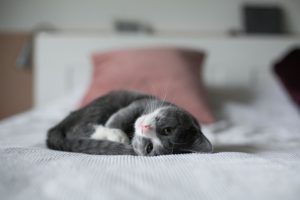
Cute Kitty Sleepover
Posted under: Cat Photos, Kitten Corner Tuesday Jun 24, 2008Tips on How to Train Your Cat!
Posted under: Cat Training Tuesday Jun 24, 2008
Want to understand a little more about cat training? Here are some things you should keep in mind!
Is This Even Necessary?
Yes! Do you want your cat destroying your furniture or eating from your dog’s food bowl? Cats are very curious animals and can be very active. How much damage can a cat cause if given the chance? Do you really want to find out?
When To Train A Cat?
As soon as possible. When you introduce your cat to his new home you will want him or her to learn the rules. A dog naturally wants to please his master but a cat has a more independent spirit. Training a kitten is also easier simply because they have not had to the time to develop certain bad habits. However, an adult can be just as trainable, and understanding and love will get your cat where you need him to be.
Where To Train?
When teaching tricks choose an interior space free of distractions. The fewer “other things” to do there are in the space the more your kitty will give you his attention. If possible, don’t let the cat have a view of the outside. If a bird flies by your cat may forget all about you!
For How Long?
Keep in mind cats have a short attention span. Keep it short and to the point. Usually 10 minutes is considered about right. After that you will probably get greatly diminishing returns.
What Is The Basic Strategy?
Positive Reinforcement. When your cat does something desirable, give the kitty treats. Negative reinforcement is usually not advisable. However, spraying water on them immediately after an undesired behavior will get their attention. Do your best to be consistent. Sending mixed messages will only confuse them.
Cats also like to test their limits. If you let them beg at the table, don’t be surprised if next thing you know your kitty is jumping up on the table. Set a limit and stick to it.
Is This A Team Effort?
Yes! Everyone residing in the same house should know the training plan and how to react to both desired and undesired behavior. It doesn’t help if your cat knows not to jump on the dinner table when you are around but any other time its “anything goes”. The more you present a united front, the faster your furry friend will learn.
Should We Keep A Routine?
Try to keep a set schedule. Your felines will feel much more at home when they can predict their daily life. It makes them feel more secure in their environment. This is also true of most, if not all, other house pets. Give them food at the same times every day. Play and training times can also be easily scheduled.
Potty Training
This one isn’t too hard. Cats naturally like to bury their droppings and you are just providing them a convenient way to do so. Keep in mind they are very clean animals and will not like it if the litter box isn’t cleaned regularly. If you ignore this basic maintenance, you will quickly find that your cat will refuse to use the box. Remember it is not necessary to throw away the uncontaminated litter.
You should also keep the litter box away from the cat’s eating area. Cats like to keep their food away from their bodily waste. Just like we do!
Note from Cat Utopia: We recommend Mac’s Cat Litter for easier covering and because it appears very natural.
Bernard Williams writes about pet related issues. You can learn more by visiting my blog at http://healthandyourcat.blogspot.com
Article Source: http://EzineArticles.com/?expert=Bernard_Williams
Dental Care for Cats
Posted under: Cat Health Friday Jun 20, 2008
There are several ways to care for your cat’s teeth at home.
- Regularly brush your cat’s teeth. This will need to be done with a special ‘cat’ toothbrush & toothpaste. Never use human toothpaste on animals.
- Purchase special diets for your cat, which are designed to reduce plaque & tartar formation.
- Feed your cat raw chicken necks or bones, however this is a somewhat controversial topic. Here in Australia, it is quite commonly recommended as a way to reduce plaque & tartar formation, though there are risks associated with feeding raw bones to cats. Speak to your veterinarian for a professional opinion on feeding raw chicken necks & or bones.
- Make sure your cat sees a veterinarian once a year for a check up to stay on top of any possible dental problems.
Here at Cat Utopia we recommend Royal Canin Oral cat food, to help keep your cat’s teeth healthy!
Feline Diarrhea
Posted under: Cat Health Thursday May 29, 2008Treatment/Action for Cats with Diarrhea
Withhold food for 12-24 hours, but not water. Sometimes pets that appear to be straining are sore from diarrhea rather than from constipation. If the problem persists, see Your veterinarian, they can help you decide what the aliment is and what will help.
Tempting Kittens
Posted under: Kitten Corner Tuesday May 27, 2008I know it is difficult to resist that cute kitten in the “free to a good home” box, or that friendly stray on the street who begs to come home with you, some cost you need to consider:
1. Quality diet
2. A safe environment indoor or outdoor
3. A carry cage
4. Bedding, litter tray & litter
5. Desexing costs
6. Vaccinations,
7. An annual veterinary examination
8. Emergency veterinary care, when your cat is sick
It’s an important and permanent decision bringing a new pet into your home.
Minoosh
Posted under: Cat Utopia Thursday May 22, 2008
Name : Minoosh
Breed : Burmese
Age : 10 months
Sex : Female
What we love about Cat Utopia:
Playing in the jungle gym and the live crickets in a ball are our favourite and the kitty nannies love & spoil me so much..
Cat with Wings
Posted under: Cat News Wednesday May 21, 2008
Granny Feng’s tom cat has sprouted two hairy 4 inch long wings, reports the Huashang News.
“At first they were just two bumps, but they started to grow quickly and after a month there were two wings” she said. Feng of Xianyang city, Shaanix province, says the wings which contain bone, makes her cat look like a ‘cat angel’.
Her expectation is that the cat sprouted the wings after being sexually harasssed. A month ago, many female cats in heat came to harass him, and then the wings started to grow” she said. However experts say the phenomenon is more likely down to a gene mutation, and say it shouldn’t prevent the cat living a normal happy life.
So SO Funny, have a look at the new trend for cats, somehow I don’t think they will take off!!
Kitten Fun
Posted under: Cat Photos, Kitten Corner Friday Apr 18, 2008
Feline Aids
Posted under: Cat Health Wednesday Apr 9, 2008|
Did you know Aids in cat’s existed? |
FLV (feline aids) is killing cats at a rapid rate and until recently, their has been no cure or prevention. Recent studies show that between 14% and 29% of cats in Australia test positive to FLV. Cats allowed outside are at the highest risk of getting the disease due to FLV being primarily spread through cat bite wounds. It is also possible for infected mothers to pass on the infection to her unborn foetus.
Feline aids can not be transferred from cats to humans, but the disease does act in the same way as HIV by destroying the Immune system. Some initial symptoms may include fever, loss of appetite, diarrhoea, lethargy and swollen lymph nodes. As the disease progresses infected cats encounter weight loss, sores in and around the mouth, eye lesions, poor coat and chronic infections. Eventually the immune system is too weak to fight off other diseases and as a result the cat dies from subsequent infections.
A new vaccine against the disease is now available, just ask your vet !
The Siamese Cat
Posted under: Cat Breeds Thursday Apr 3, 2008
Siamese cats originated in Southeast Asia, although the exact origins of the breed are unknown. It was not until the twentieth century that Siamese cats became popular in western cultures. Today, Siamese cats are among the most popular breeds of cats in the world, and it is no wonder.
The appeal of Siamese cats begins with their stately and unique appearance. Their streamlined shape, striking facial features, almond shaped eyes, and contrasting colors give Siamese cats a distinctive look that is different from any other breed. But Siamese cats are more than just a pretty face; they are renowned for their personalities as well.
Siamese cats are considered to be among the most social and extroverted of all breeds. They are warm and affectionate and often bond strongly to their owners. Consequently, Siamese cats are less independent that other cats and enjoy the confines of home with their owners. Siamese cats are also known for their distinctively loud, low pitched voice.
Despite their high intelligence, Siamese cats are not necessarily easy to train. While some cats may heed your instructions from the very beginning, others may have a more inquisitive nature that leads them into mischief. However, it is rare that Siamese cats scratch furniture, and it is likely that they will prefer a carpet or scratching post to your precious sofa. But it is equally likely that you’ll occasionally find your Siamese cat perched on top of your bookcases or even your refrigerator. You would be wise to keep any breakable items off the top shelf!
Siamese cats should always be purchased from a reputable breeder. Good breeders will ensure that your cat has pure bloodlines, proper inoculations, and have developed their physical and social abilities enough to make the adjustment to a new home and owner.
Article Source: http://EzineArticles.com/?expert=Michelle_Bery